

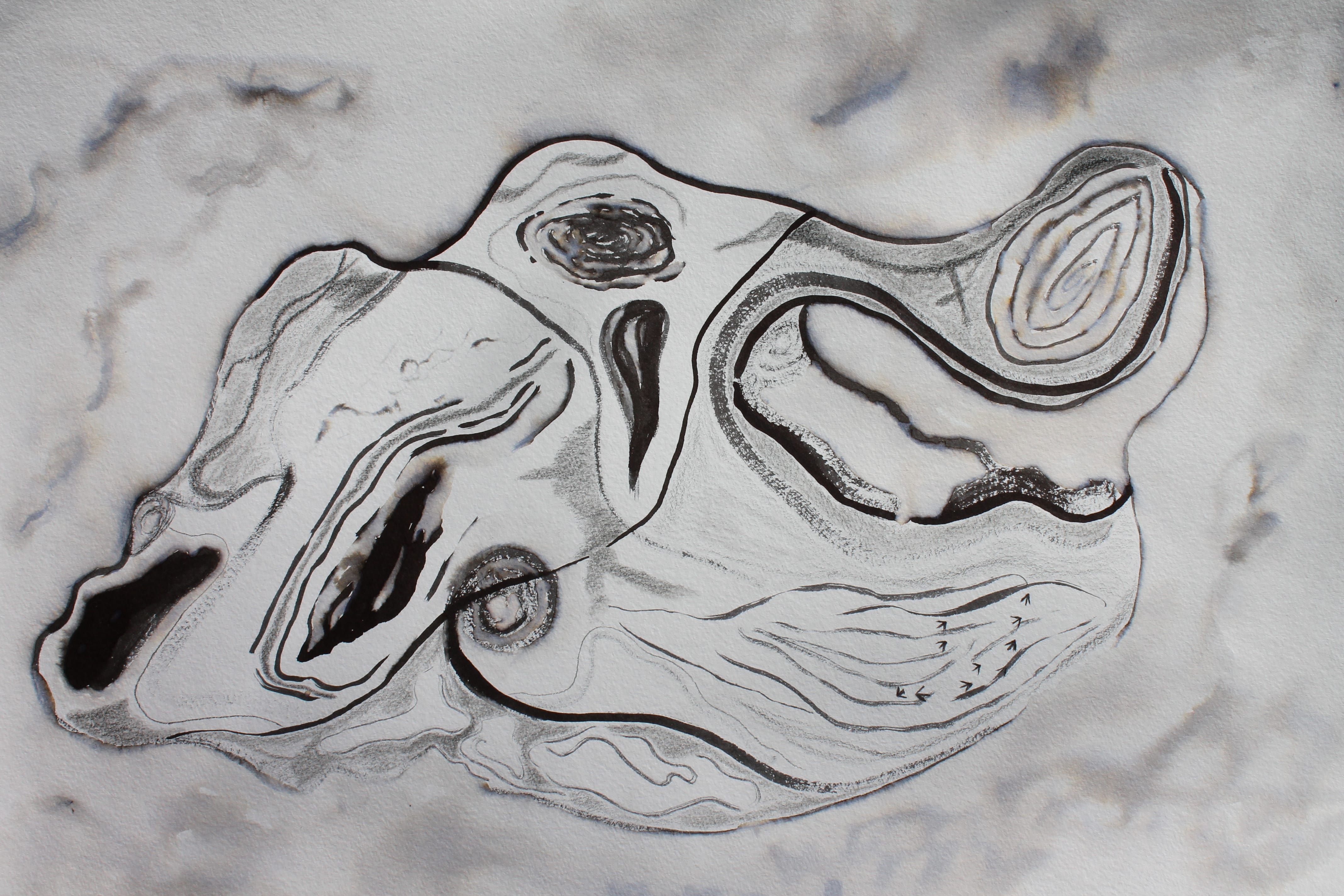
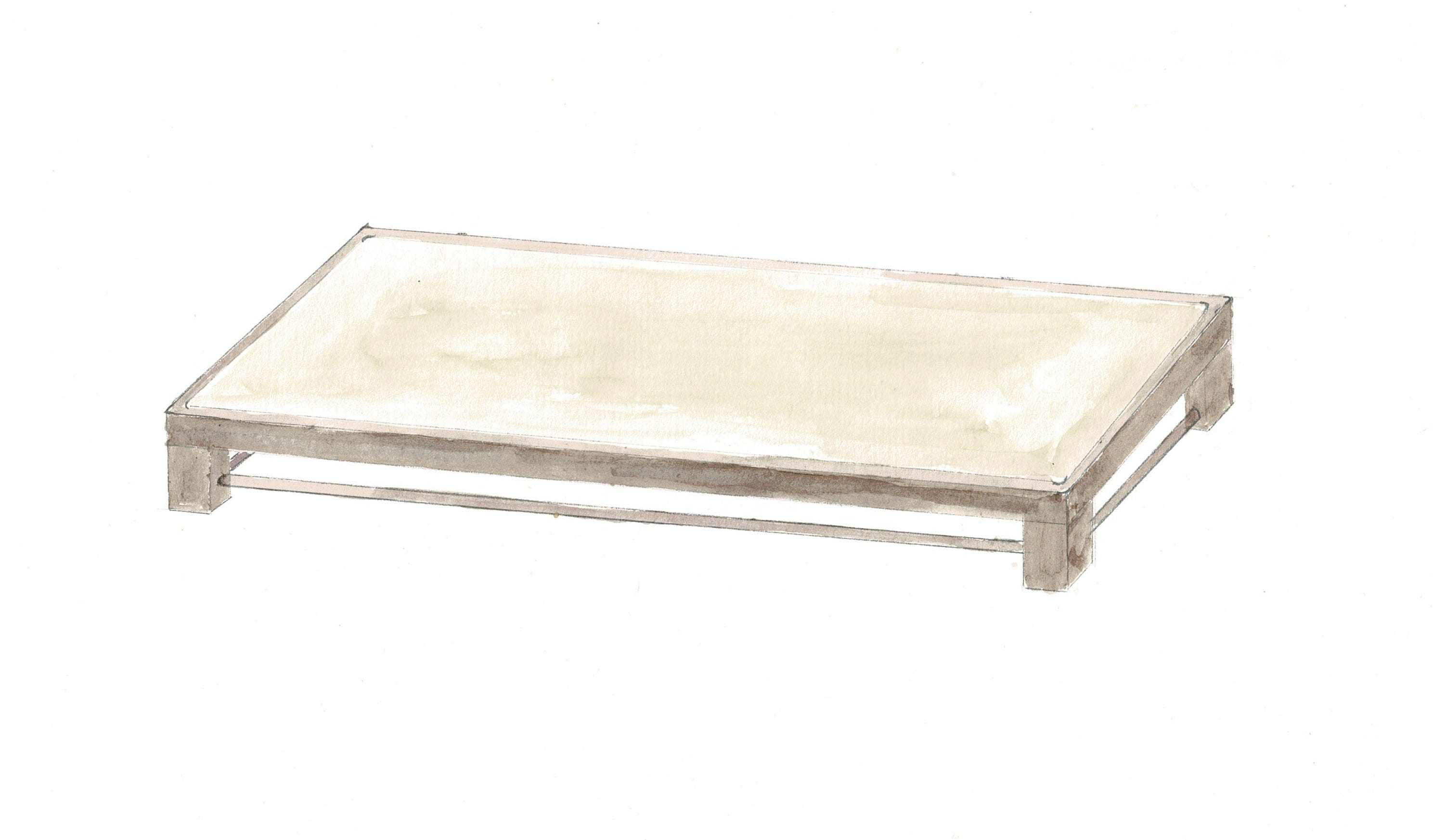
to make a bed of silt, i began thinking through ways that i could create an environment and an inhabitable space as an installation - allowing visitors to spend time within it and as a way to bring together all of the elements of my work into a visual language of story-telling.
i needed to figure out the bed space for the silt mat to work as a pillow that people could lie down, with the salt - silt - silk - kiss sound piece towards where their head might rest.
i began drawing out how the silt curtain, bed and silt mat might interact together and fit within the gallery space, using the two columns as a guide.
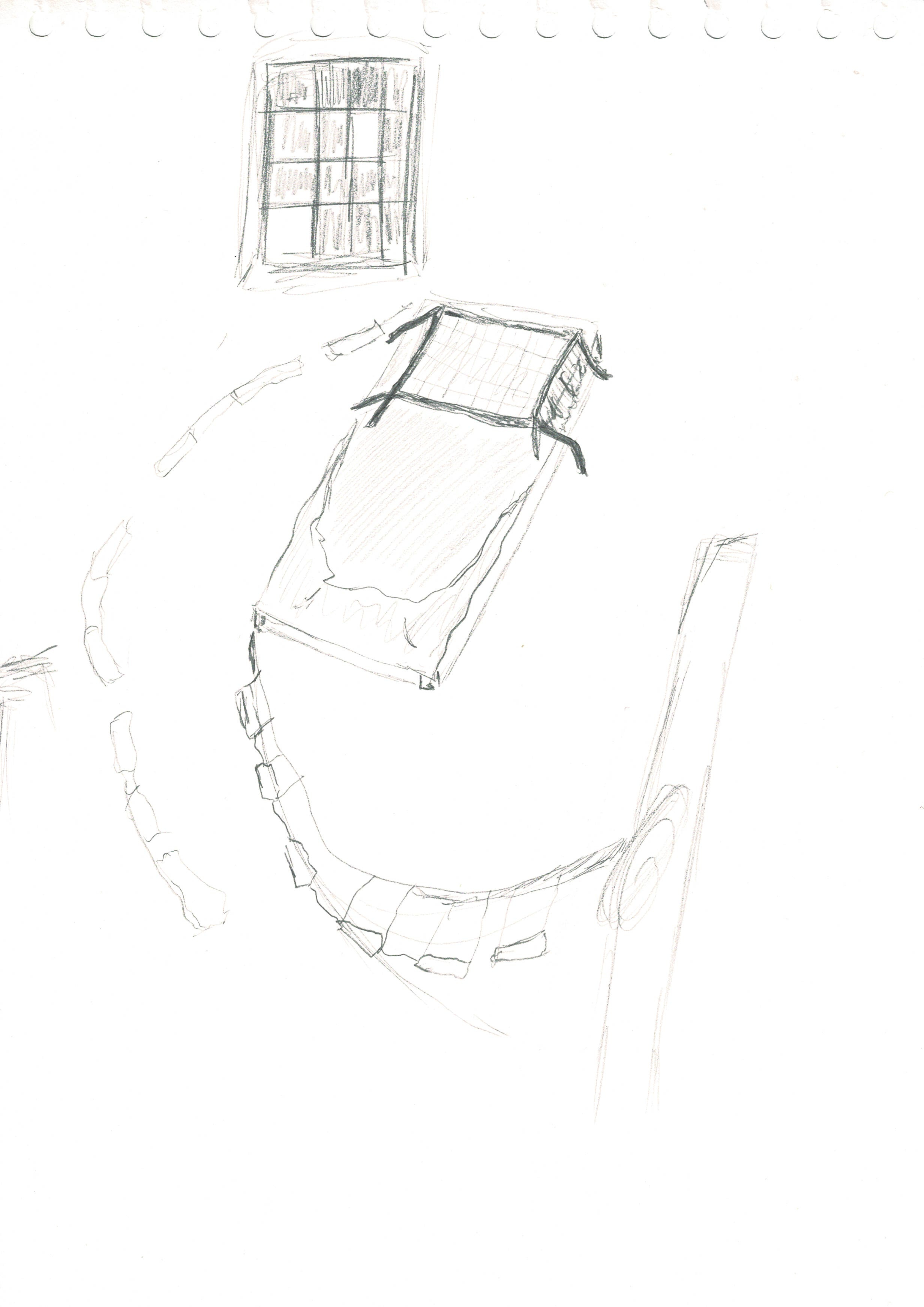
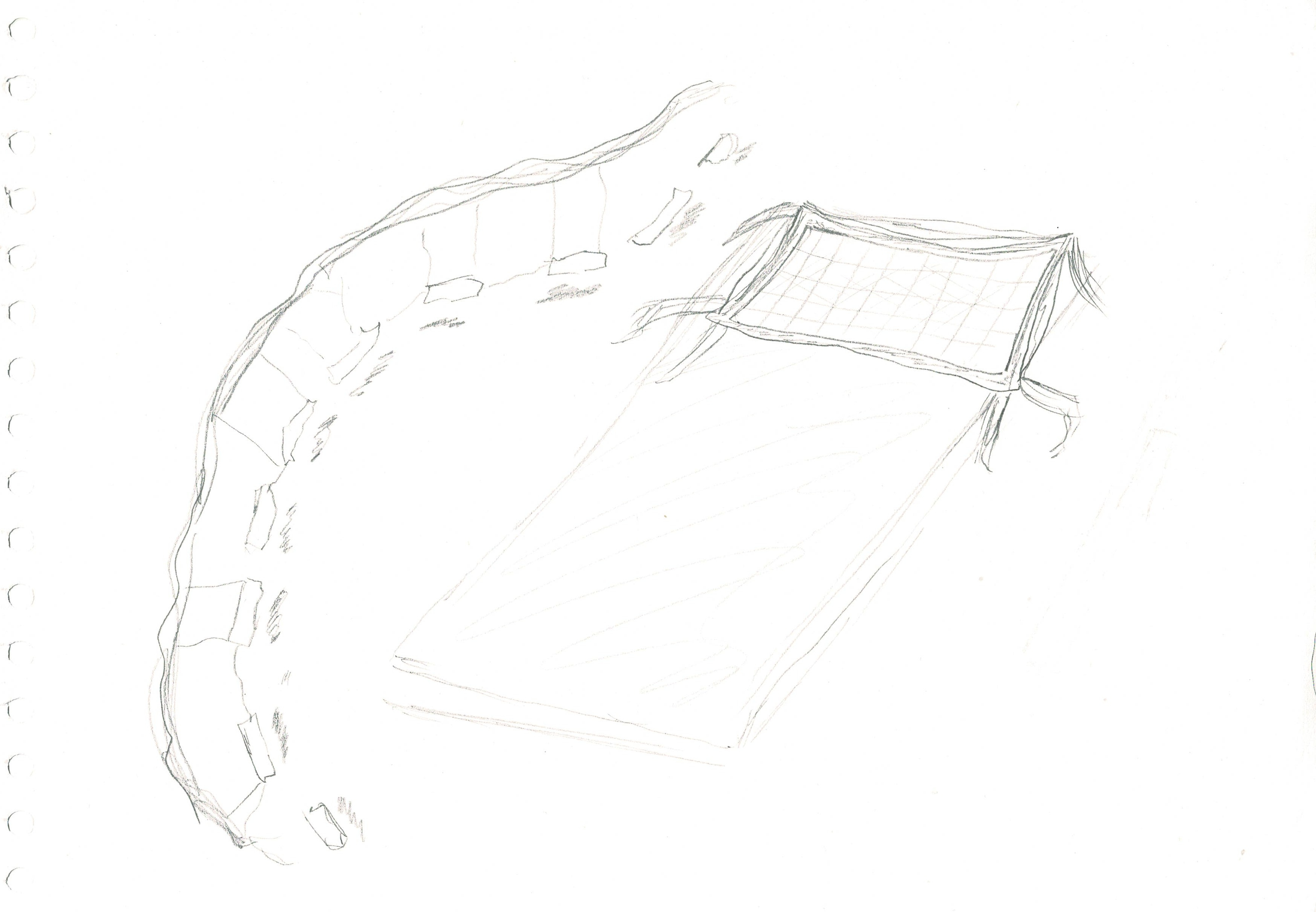
i also began looking at different materials to consider the colours, textures and design of the bed. i knew i wanted the bed and silt mat to be low to the floor, to enhance this feeling of being under water or below the surface. i also wanted it to feel as much a part of the work, using a wood stain that referenced the dark oak on the ship and adding wooden dowels around the bottom of the frame to create something that rope could be tied to or wrapped around.
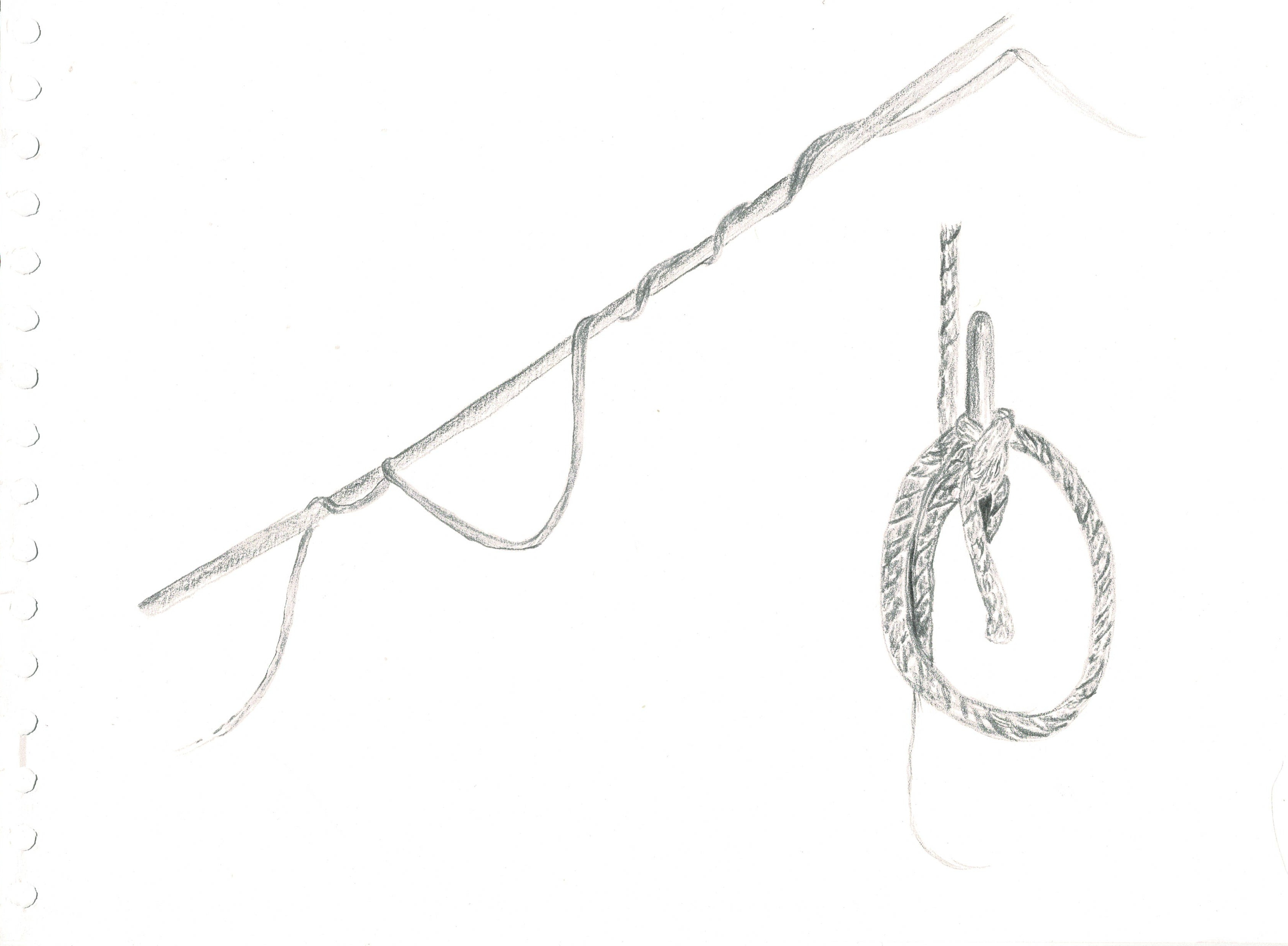
to build the environment around the bed, expanding outwards with this idea of a shipwreck as a queer ruin, i searched for fragments of glass, rusty metal, brick and wood at the hard, collecting anything of interest, thinking of ways to create tether points for the silt curtain.
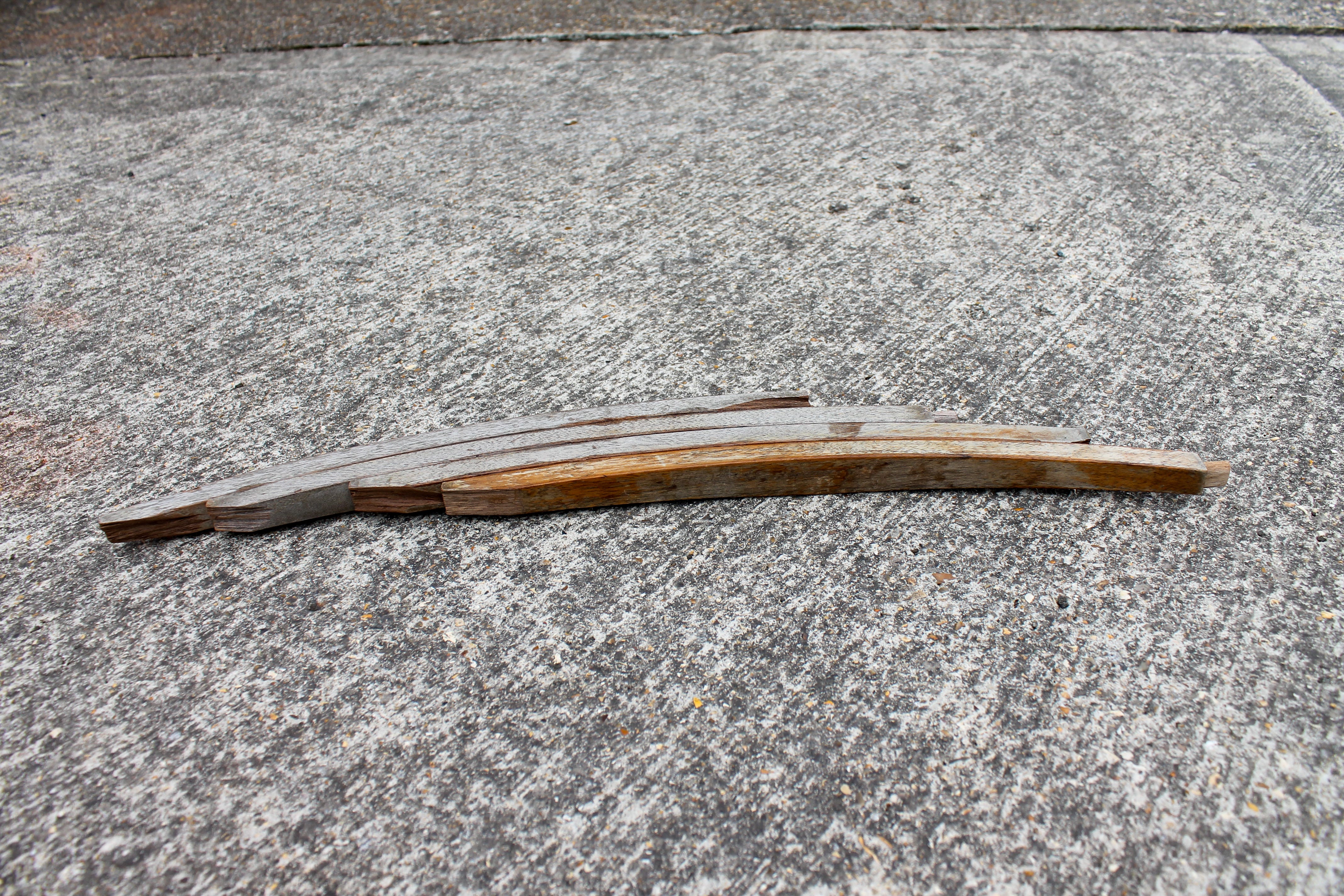
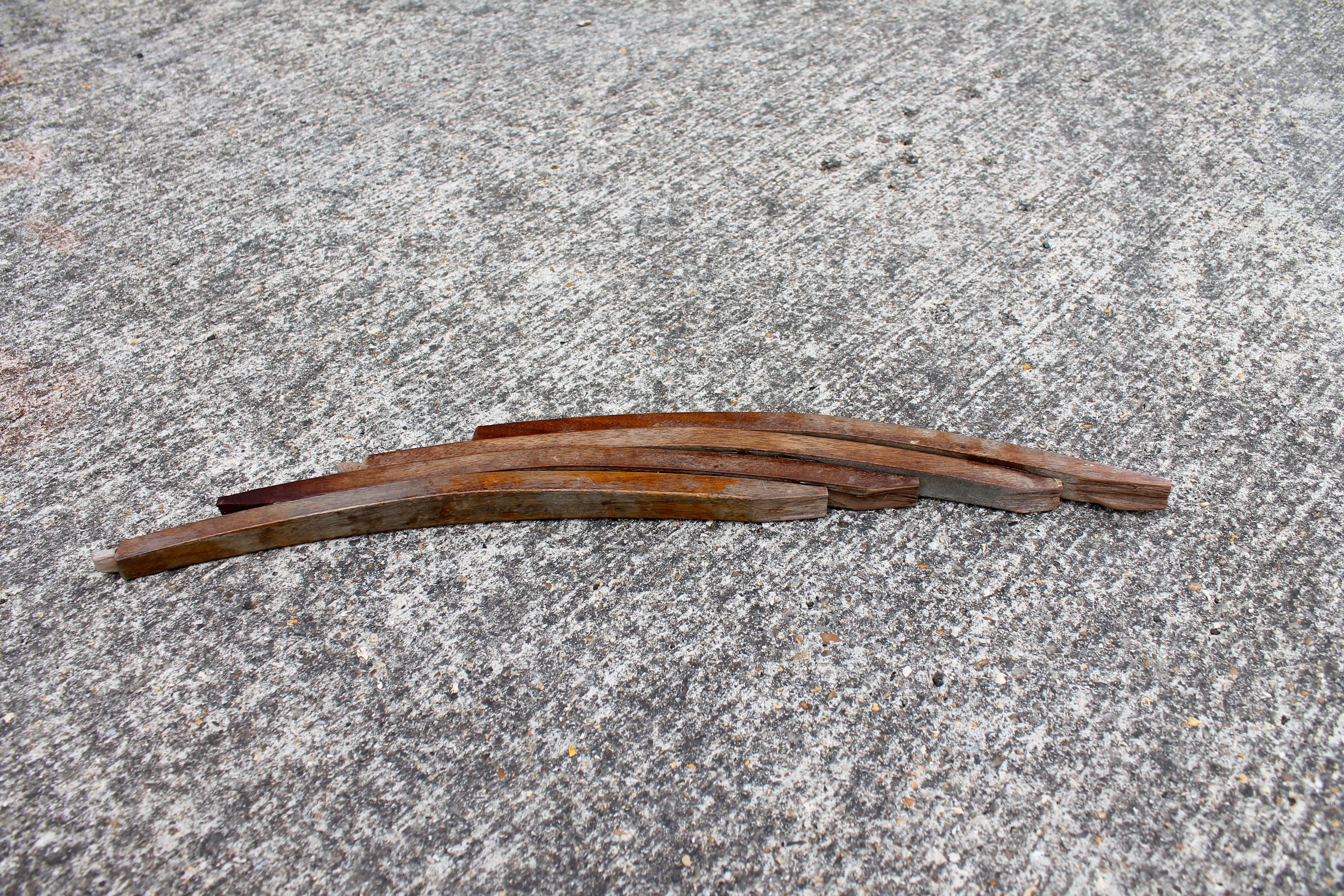
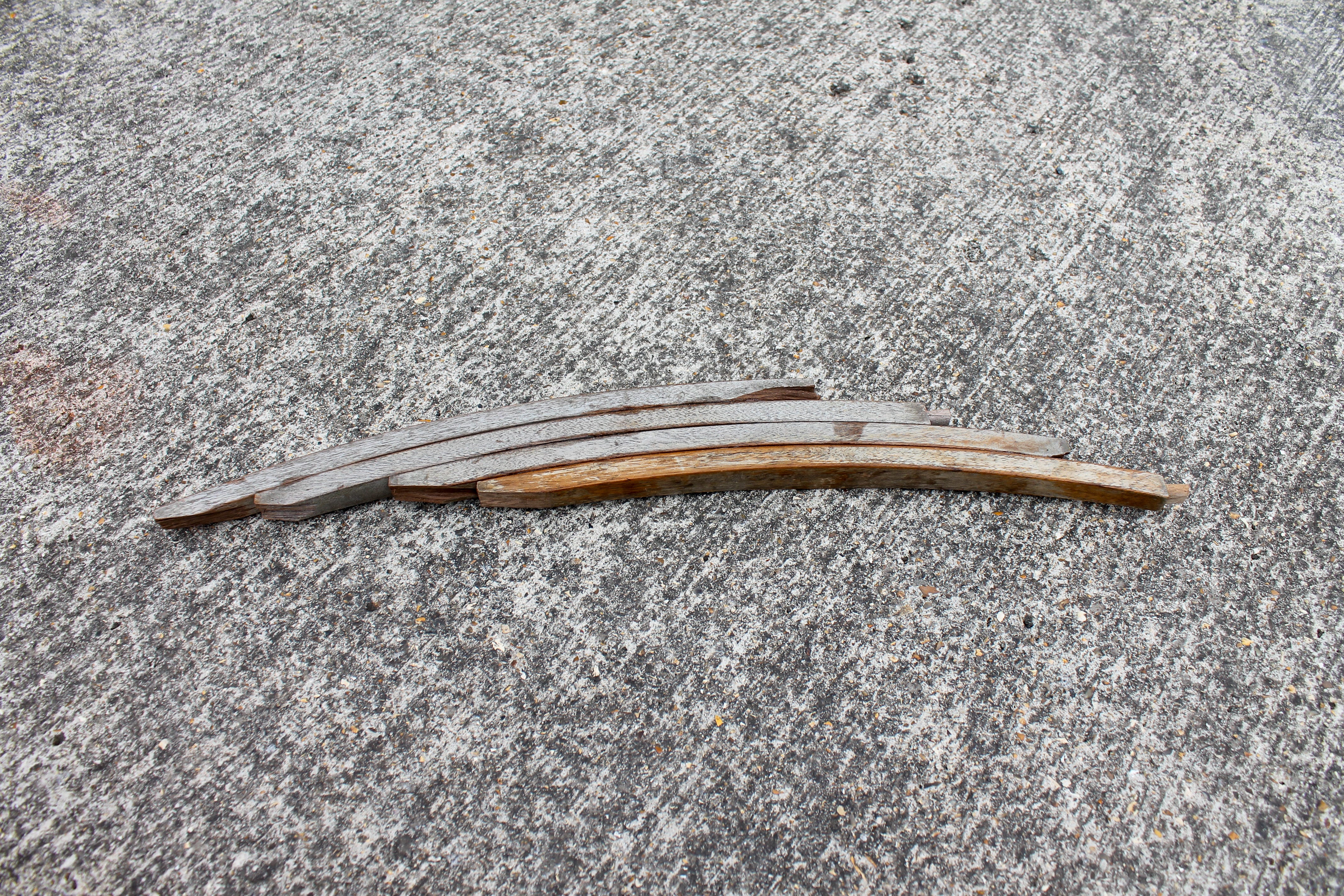
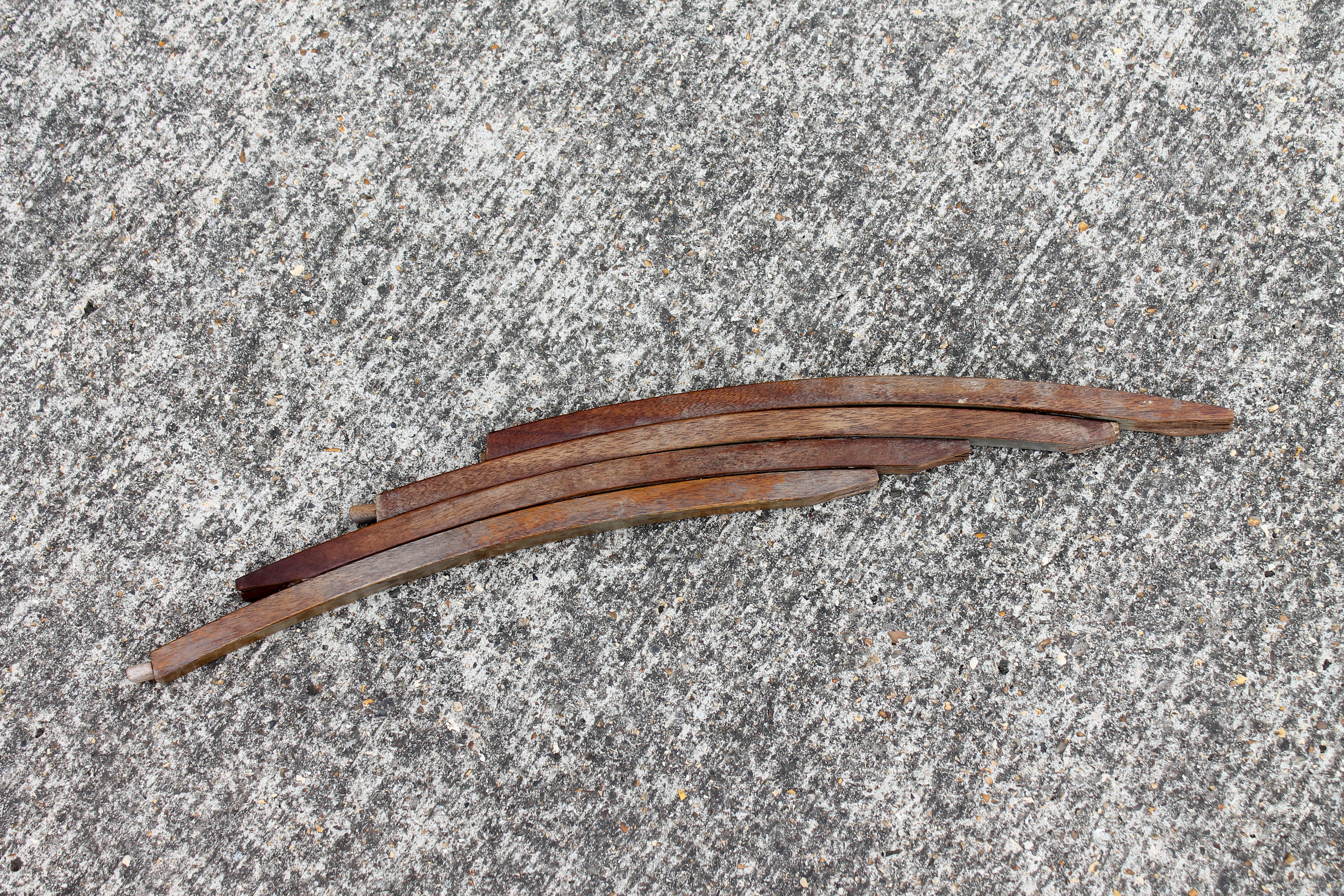
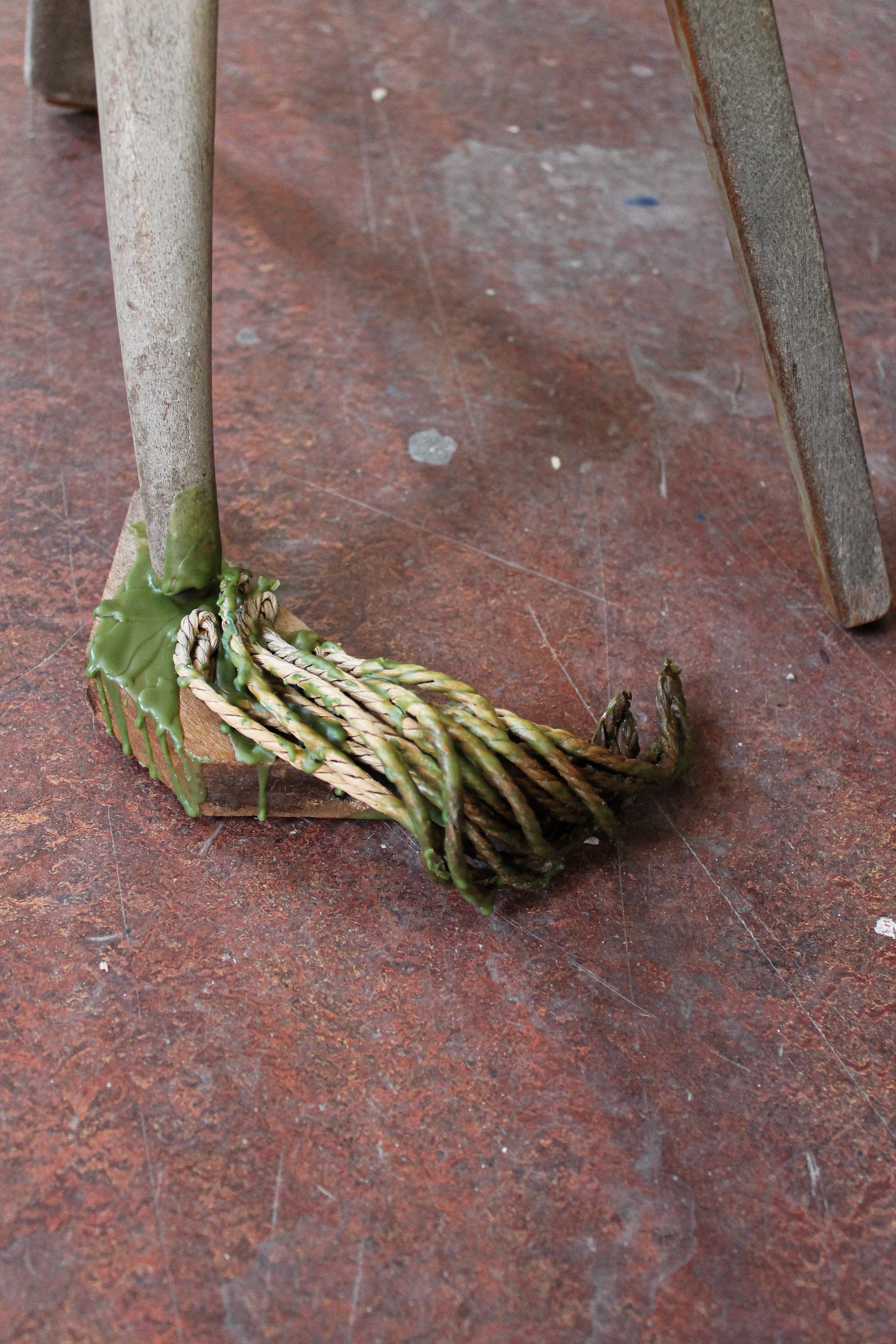
katy [home of the good chair] had some broken chairs which had been bleaching in the sun and were hidden under an old sail behind the studio. she kindly let me make use of pieces of the chairs, using chair legs, backs, sides as material for sculptures.
i assembled the wood and other fragments, creating a series of sculptures that could act as structures and objects lost from the shipwreck and transformed by the sea.
on some of these pieces, i kept the original staples and remnants of the seat weave, intrigued by the way the cord looked like seaweed, creaturely, bringing life to the wood. i also transformed the sculptures further by dousing them with melted beeswax with green pigment, so that everything was in a way touched by this material.
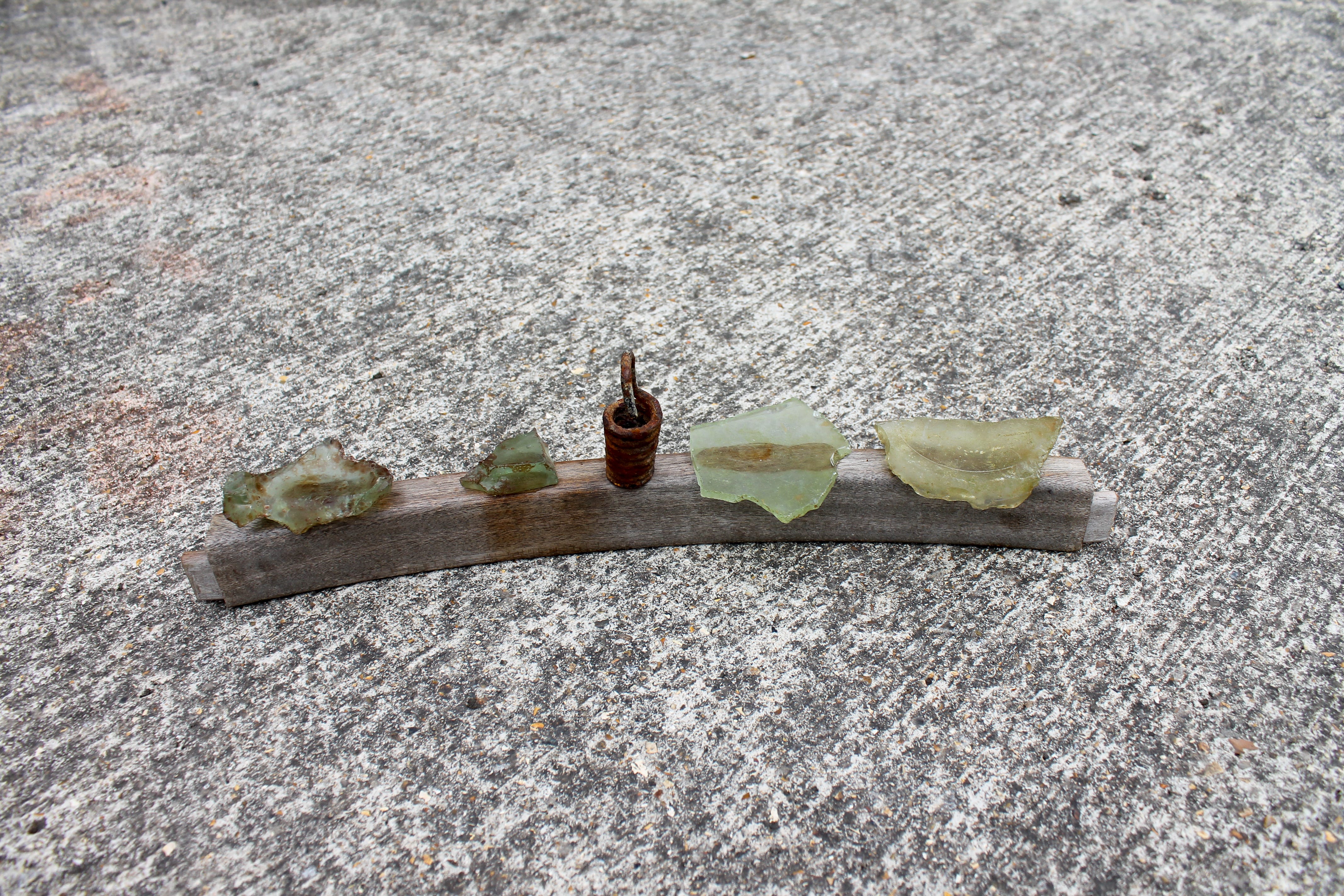
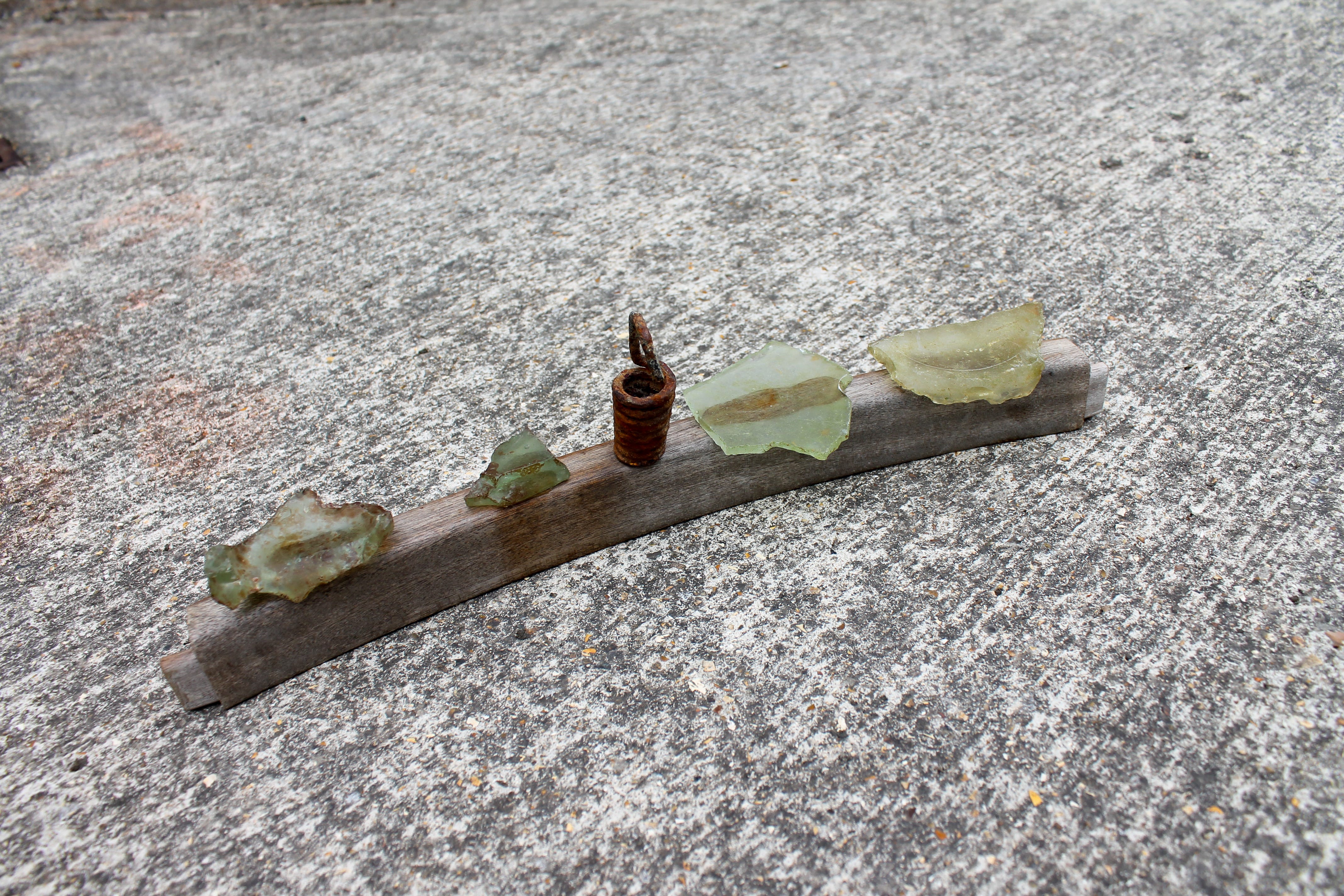
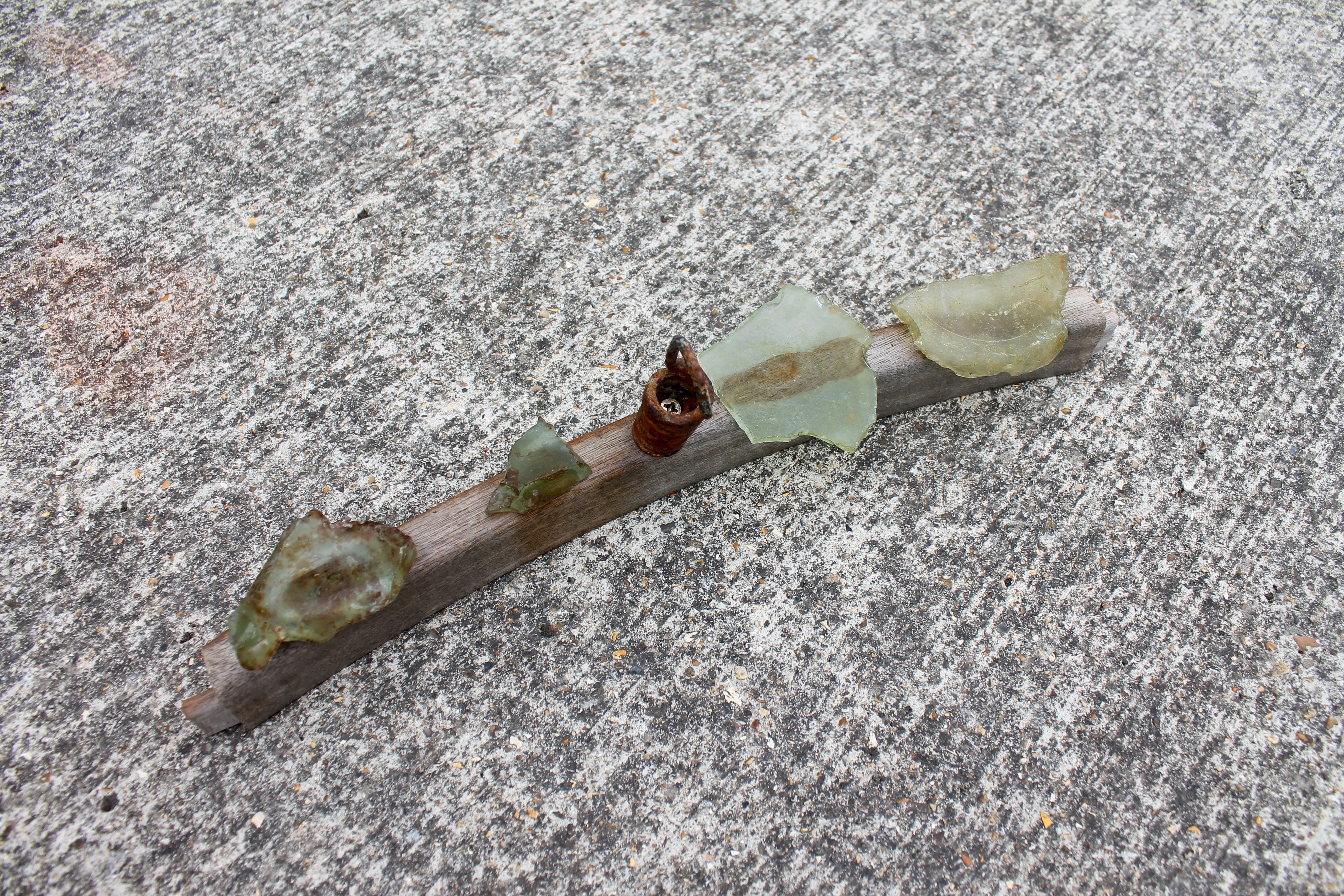
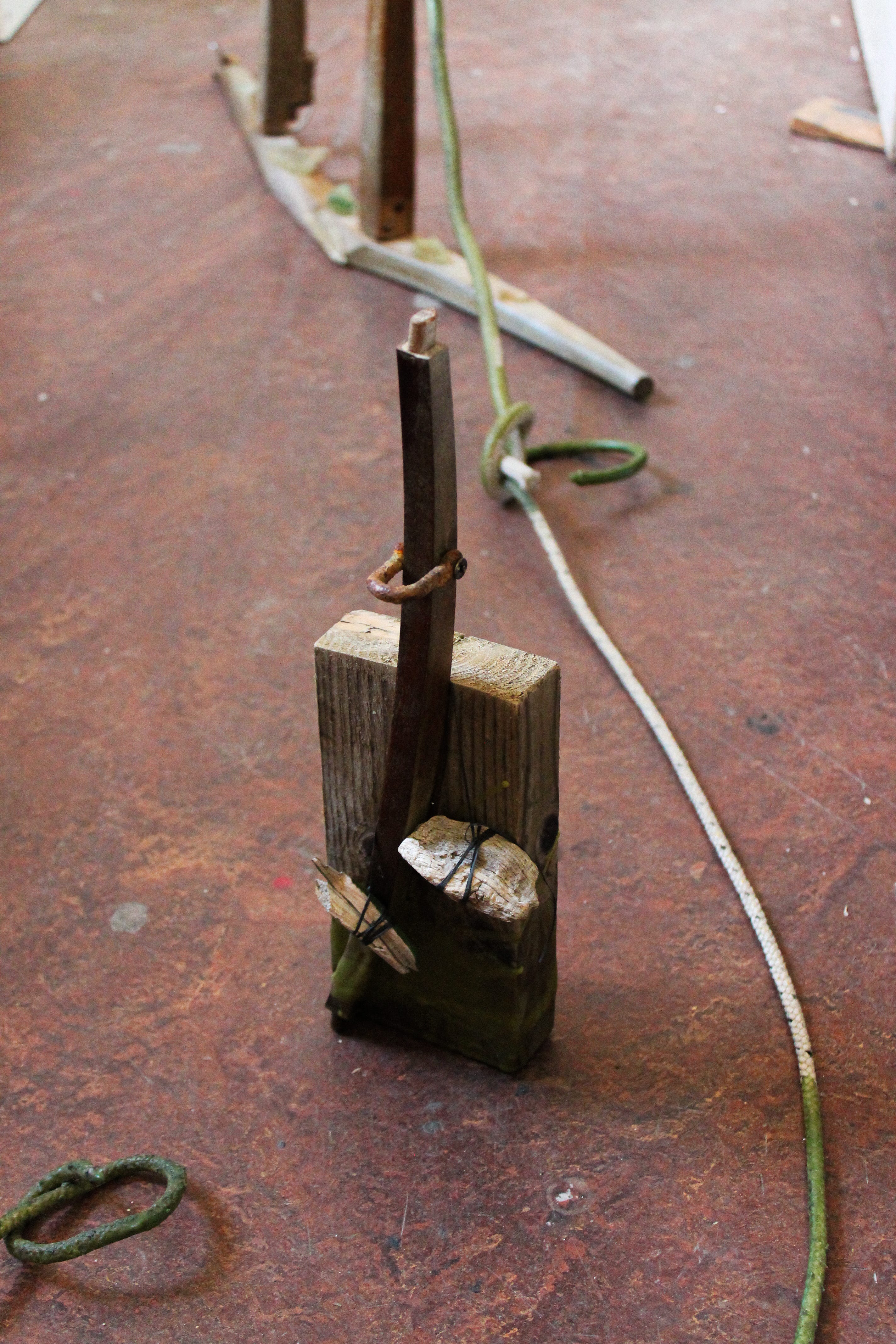
i began experimenting with ways to tie / hand the silt curtain between these structures, as preparation for how they would come together in the space.
-
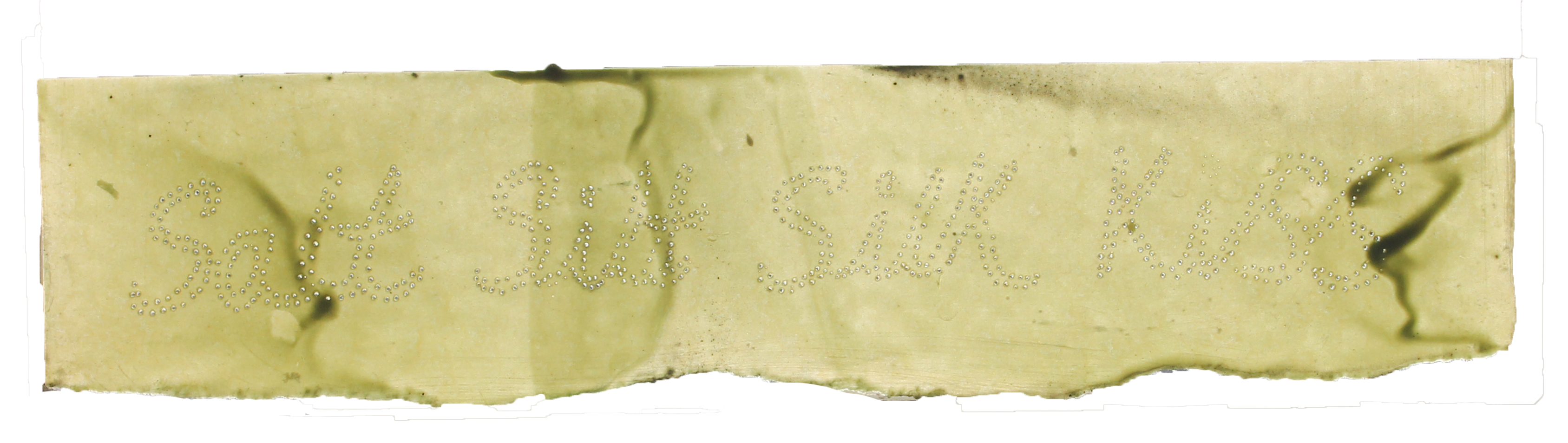
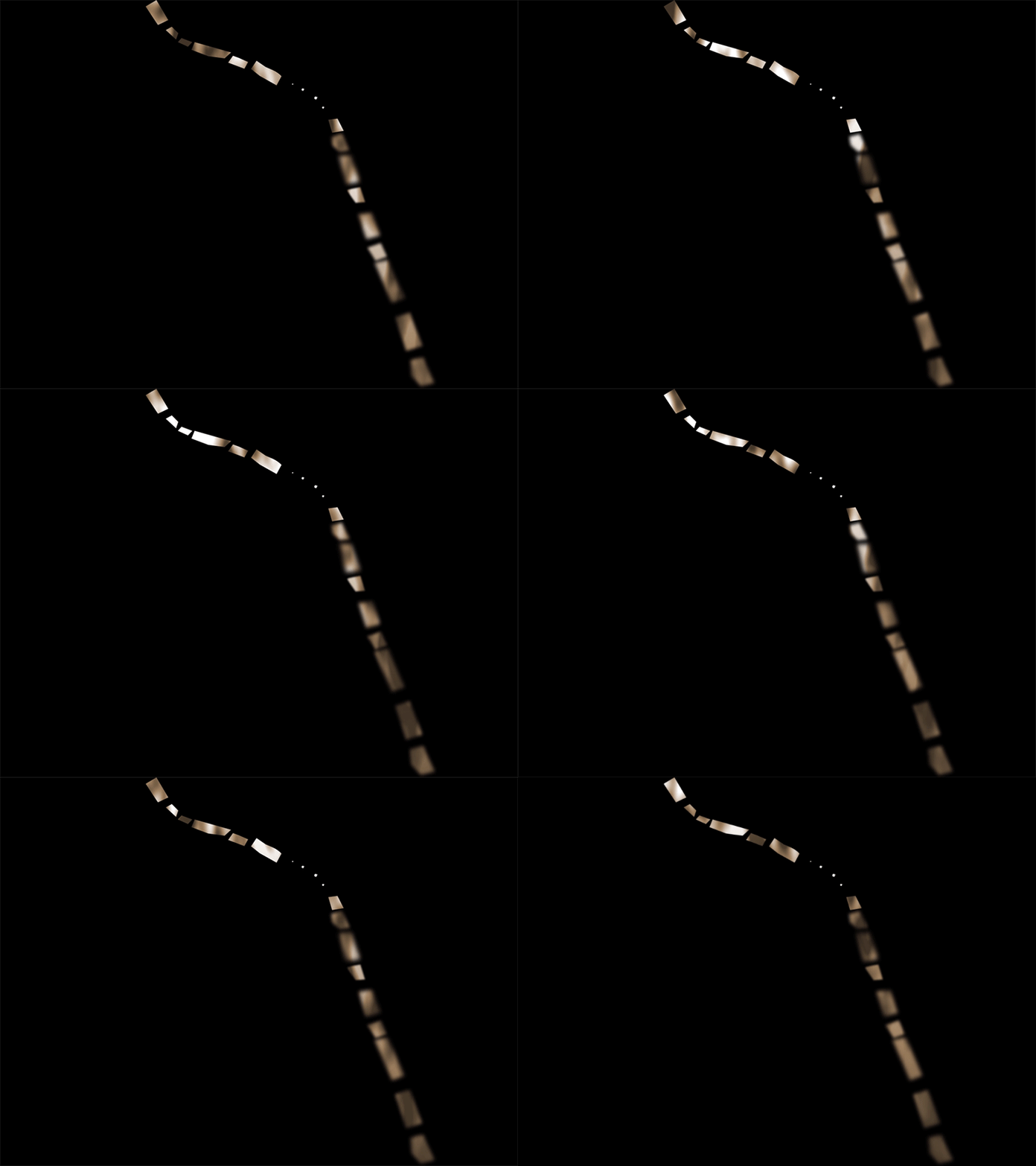
in my previous post, i mentioned a very important aspect of this work was finding a way to use projection mapping on each of the individual wax papers of the silt curtain.
below are some gifs and a video showing more of this process.
we created a moving texture as an animation, testing different shapes, movement, speed to see what looked most effective in creating a watery, fluid movement of light, which echoes the idea of time passing, shift patterns, the movement of waves and the tide, the flickering of candlelight.
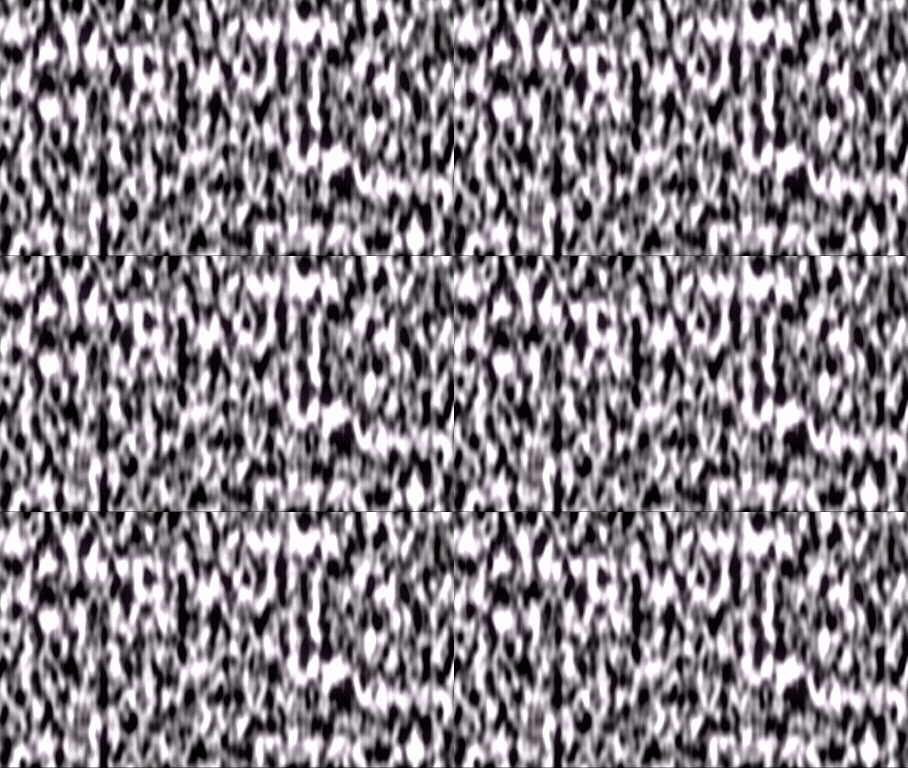

we tested this with different colours, including a warm orange and natural light.
the below gif shows the shape and movement of the final projection mapping we did in the gallery.
you can read my previous post for ‘ resonate (ii) part three’ here.