In 2025-26 I am developing my facilitation and socially-engaged practice with a Develop Your Creative Practice grant from Arts Council England, exploring queerness in relation to the sea/coast, through mentoring, collaborations & research - delivering free workshops for LGBTQIA+ adults in Portsmouth in 2026.
I am excited to be collaborating with Ruby Campion, a multidisciplinary artist and arts facilitator, working primarily in sculpture, installation, and performance. Ruby is based in Brighton.
Ruby travelled from Brighton to Portsmouth on 14 October and we met in person for the first time as our first half day together, to share our practices and begin exploring how we want to collaborate.
i invited Ruby to Play Office so that i could share my work with them, explaining the materials and research behind each piece and how they come together as elements of a story, including work from wandering sailor and to make a bed of silt. this was the day after we had just de-installed our exhibition In Touch, In Ruin from Aspex, so it felt strange to have all of the elements back at the studio, but also a nice way to begin transitioning into a new project.
we then spent some time chatting about how our practices overlapped, making connections between the ways in which we work & also sharing our experiences working as an artist. Ruby told me about their facilitation practice working with Towner Eastbourne’s Family Days and how they manage creating interactive workshops for large groups of people and i shared some of my experience of facilitating Together - Make Art at SPUD.
we are both drawn to working with objects and place in our practice, integrating found elements from our environment and working with the natural world.
we began mapping these connections onto a large piece of paper and adding in areas of interest relating to queerness of the sea/coast that might inform the direction of our collaboration. some aspects of this included:
senses bring in bodiliness
the body in the landscape/landforms/objects within the land (both human & non-human aspects of this)
transformation: what it was/will be
the actions of the tide slowly creating form (pools & channels, movement & stillness)
the coastline/sea as a bridge between worlds
storytelling as a way to make sense of our world/experiences
folktales/ghost stories
repetition and ritual
offerings: for protection, safe travel/voyage/returning (made by & for sailors)
maritime graffiti
ritual as performance
gathering, pressing, sculpting, tying, casting
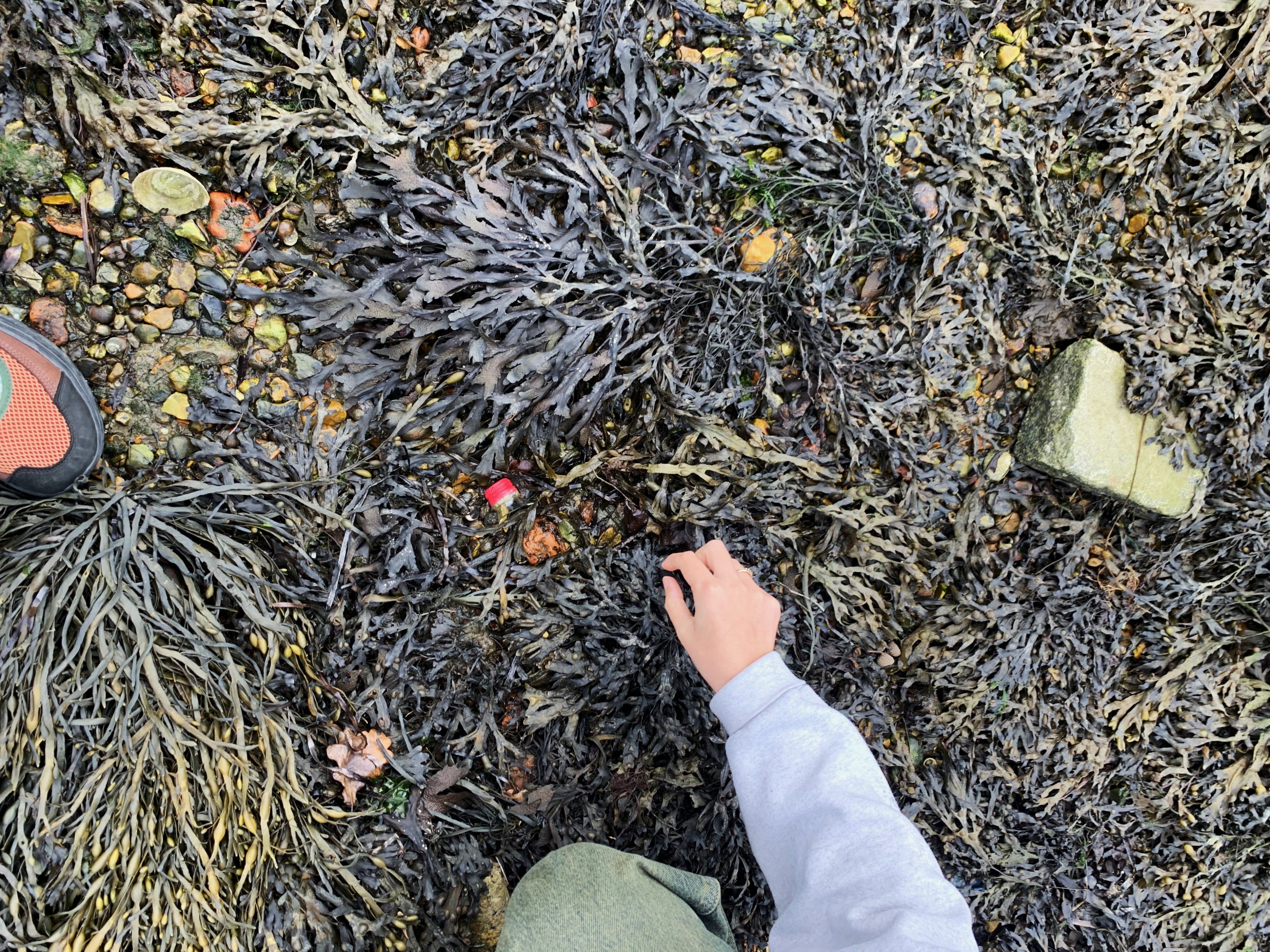
after this, i took Ruby to the Hard where we began looking for some elements of what we had spoken about in our environment.
Ruby found an amazing hollow piece of metal which had merged with stones, shells and sea creatures.


what words can we spell from the fragments we find at low tide? NOCK / KNOCK
listening to the creaking of the walkway from the Dockyard to the HMS Victory as the waves gently rock the boat
the way different elements become joined
by living matter (seaweed, barnacles, limpets)
the combination of natural and manmade materials & scattered fragments of the past.
-
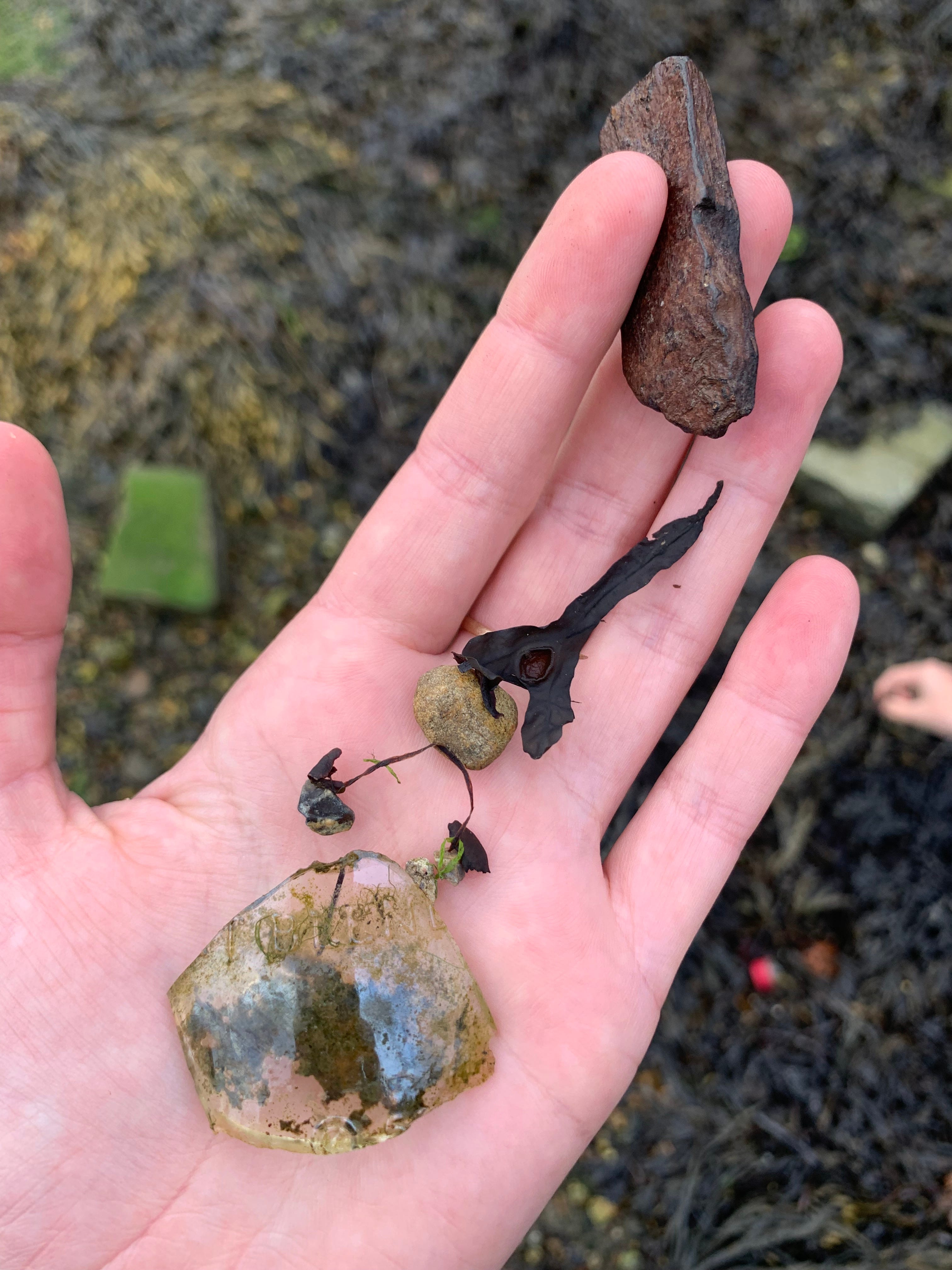
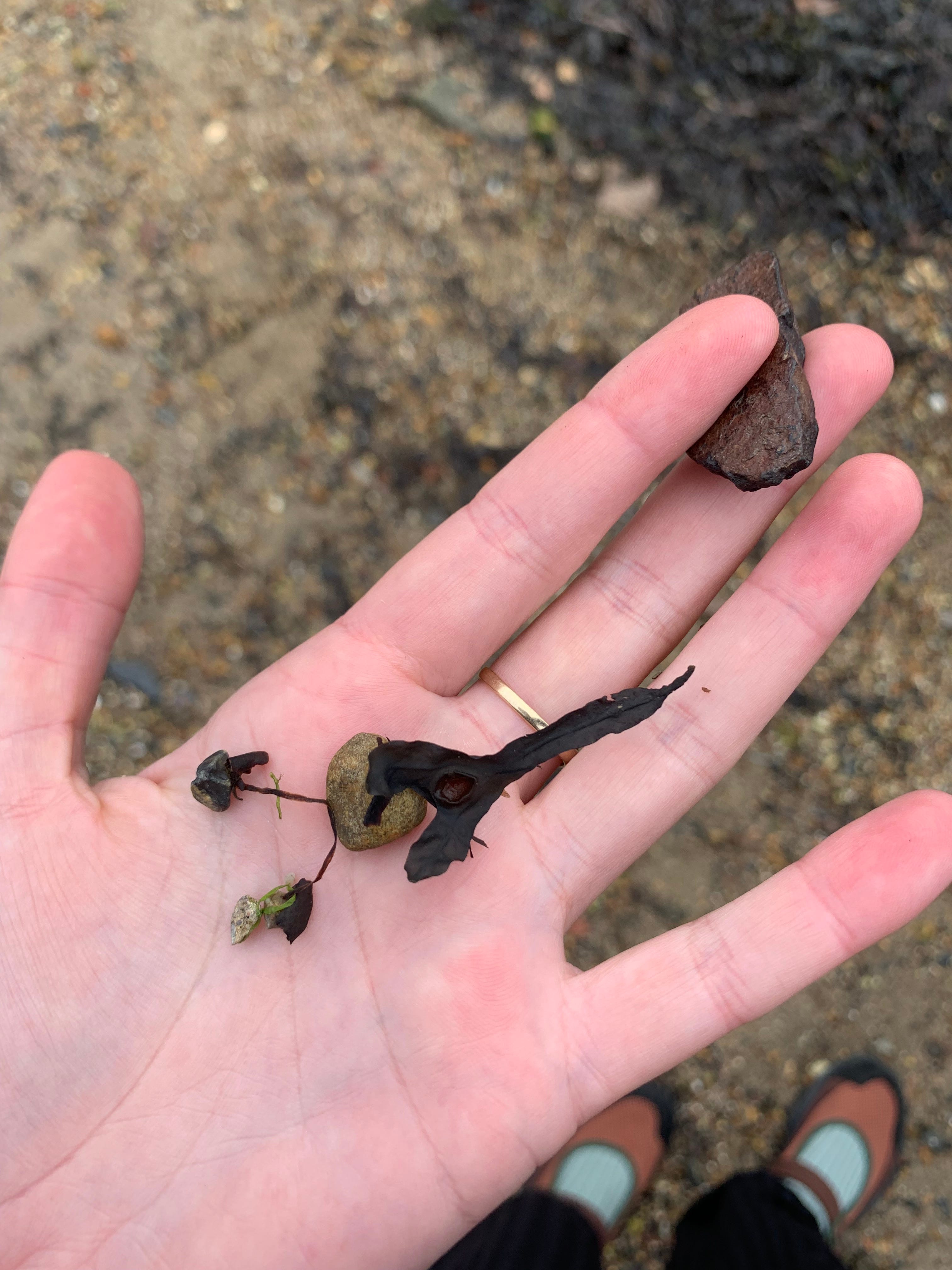
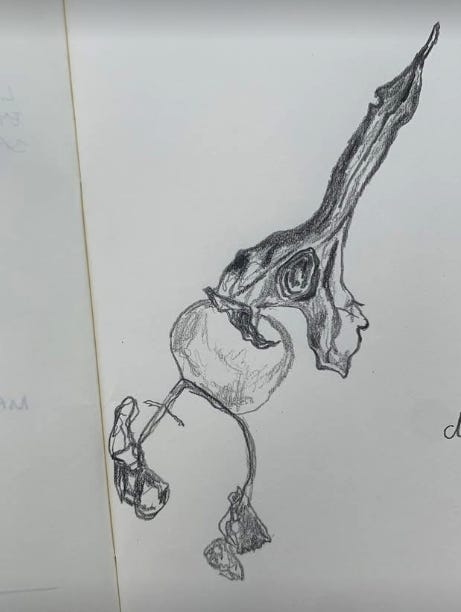
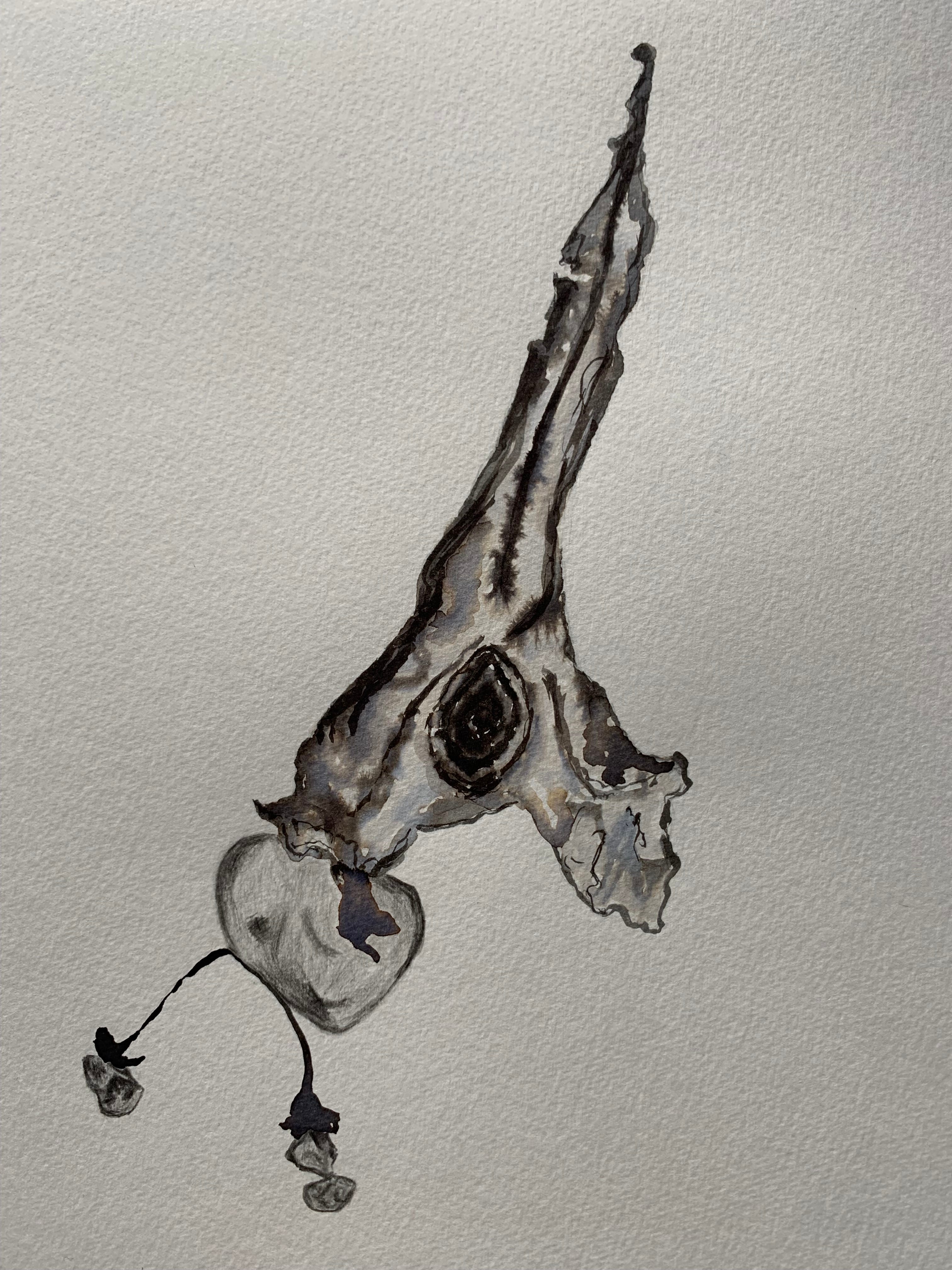
i was really drawn to this tiny piece of seaweed which was holding onto a small stone, with two more strands of seaweed attached to that, each holding onto a couple of even smaller stones. this resembled to me a visual association with clitoral diagrams, but also an ambiguous/hybrid reproductive system.
-
we then followed part of the ‘millenium promenade’ walk from the Hard, past the camber and down to Old Portsmouth, another historical part of the Portsmouth’s coast being the original medieval town of Portsmouth founded in the 1180s. we went down onto the beach at Hotwalls, by the Round Tower & Square Tower.
here we found much more vibrant green & pink seaweed, like red threads connecting on a spiders web. also bright green glass and a pink shell.
fragments of faded writing on the hotwalls wall.


-


this has been possible thanks to a Develop Your Creative Practice grant from Arts Council England.